How to Write an Impressive Cover Letter in 2026
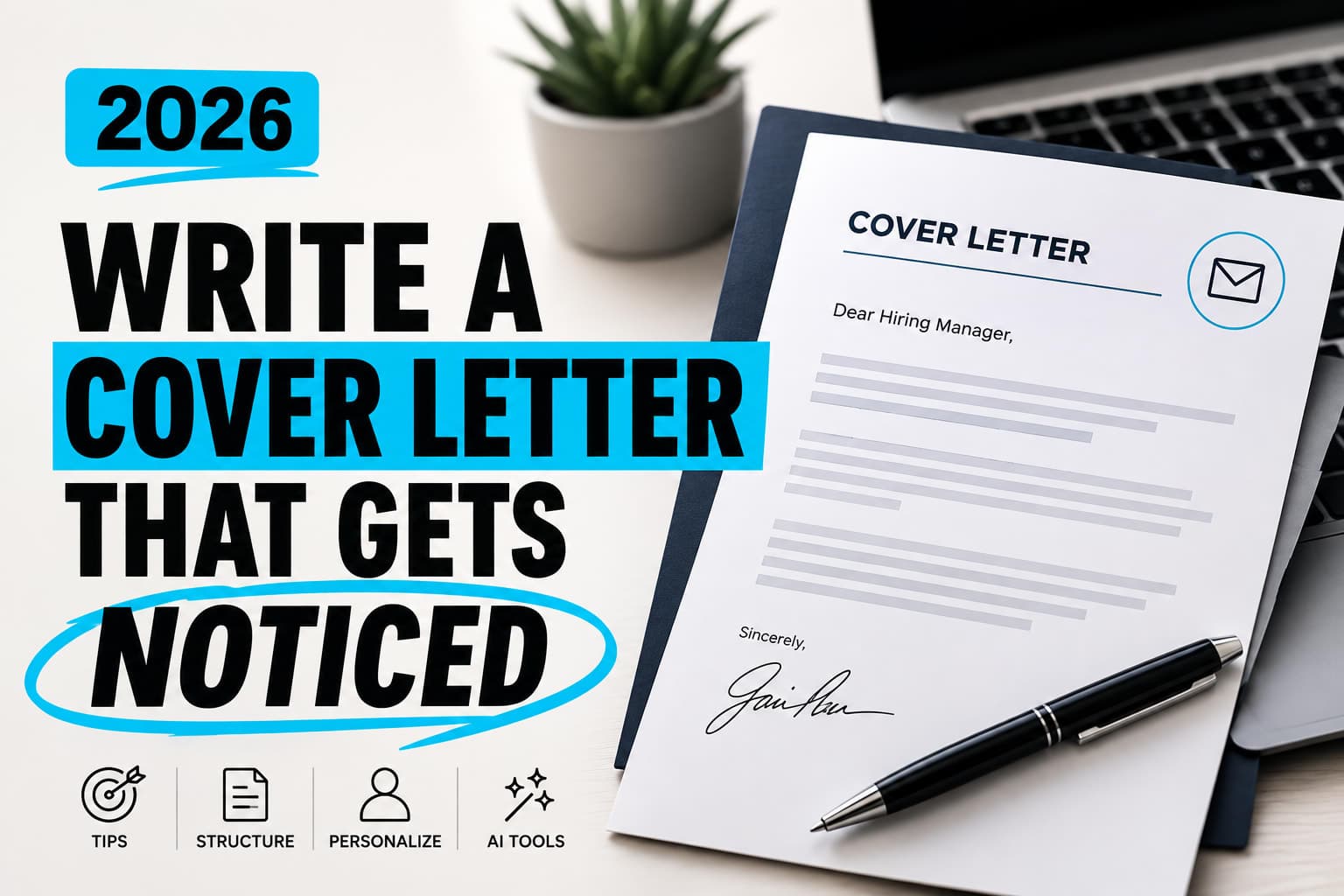
A complete 2026 guide to writing a cover letter that gets noticed, with tips on tone, structure, personalization, and using AI tools the right way.
A Comprehensive Guide to Writing an Impressive Cover Letter in 2026
A cover letter is still one of the most underused tools in a job application, even though it remains one of the best ways to stand out from a stack of similar resumes. Done well, a cover letter doesn't just repeat your qualifications; it tells the story behind them, explains why you want this specific role, and lets you address anything a resume alone can't, like a career change, a skills gap, or why you're excited about this particular company rather than any company.
With hiring now moving faster than ever and applicant tracking systems filtering resumes before a human ever sees them, a strong, specific cover letter in 2026 is one of the few remaining places where your genuine voice can cut through the noise.
This guide walks through exactly how to write a cover letter that gets read, gets remembered, and gets you an interview.
You may also want to read our companion guide: How to Make an Effective Resume (CV) in 2026.
1. Understand What a Cover Letter Is Actually For
A cover letter is your opening move, not your full pitch. Its job is to get a hiring manager to actually open and read your resume with interest, rather than skimming past it in a pile of applications.
In an era of online applications and automated filtering, a well-written cover letter matters more than ever. It's your chance to tell a short, human story that a resume simply can't. You're not just trying to get someone to glance at your resume; you're trying to convince them that you're worth a real conversation.
2. Write Like a Person, Not a Template
The biggest mistake applicants make is treating the cover letter as a formality, a box to check before uploading a resume. That approach almost always produces flat, forgettable writing.
Write in plain, natural language rather than stiff corporate jargon. Before you start, it can help to read a few examples of strong cover letters in your industry so you get a sense of the tone employers expect. Just be careful not to copy structure or phrasing too closely; the goal is calibration, not imitation.
A note on AI writing tools in 2026: AI assistants can be genuinely useful for brainstorming talking points, tightening sentences, or checking grammar. But hiring managers now read hundreds of AI-polished letters every week, and generic, overly smooth AI-generated cover letters are increasingly easy to spot and easy to dismiss. Use AI tools to sharpen your own ideas and experiences, not to generate the letter from scratch. The most effective letters in 2026 are the ones that still sound like an actual person wrote them.
3. Explain Why This Job, Specifically
A cover letter isn't just a sales pitch for you. It's also evidence that you understand what makes this employer and this role different from every other option you could have applied for.
A strong letter should:
- Explain why you specifically want to work at this company, not just "a company like this."
- Describe what you can do for them and how your work will help them reach their actual goals.
- Give one or two concrete examples of past work that closely mirrors what the role requires, or, if you're changing fields, work that demonstrates transferable skills.
Generic enthusiasm ("I'm passionate about your mission") reads as filler. Specific enthusiasm ("I noticed your team recently launched X, and my experience doing Y directly applies to that kind of work") reads as genuine interest.
4. Address the Employer Directly
Whenever possible, address your cover letter to a real person by name rather than "To Whom It May Concern" or "Dear Hiring Manager." A quick look at the job posting, company website, or LinkedIn is often enough to find the right contact.
If you genuinely can't find a name, address the letter to the relevant job title or department instead (for example, "Dear Engineering Hiring Team"), so it's clear you understand who has decision-making authority over the role.
5. Keep It Concise: One Page, No Exceptions
A cover letter is a short, focused communication, not a second resume. Its job is to make a case, not document every detail of your career. That's what your resume is for.
The strongest cover letters stay to one page. This isn't an arbitrary rule: hiring managers process shorter, tighter writing faster, and a concise letter signals that you respect their time. If your draft runs long, look for ways to combine sentences, cut repeated points, and replace wordy phrases with sharper, single-word alternatives. AI editing tools can be genuinely helpful here for suggesting tighter phrasing, just make sure the final version still sounds like you.
6. Tailor Every Letter to Every Job
Never reuse the exact same cover letter across multiple applications, and avoid generic, fill-in-the-blank templates wherever possible, except perhaps for entry-level or internship applications, where some standardization is more accepted.
If you find a template structure you genuinely like, it's fine to use it as a starting framework. But don't copy and paste the same content into every application. Rewrite the specifics for each role, and if you use an AI tool to help reword or restructure a base letter, make sure the final version is meaningfully personalized to that employer and that job. This single habit, genuine customization over copy-paste, does more for your credibility than almost anything else on this list.
7. Proofread Carefully, but Don't Overdo It
Before sending any cover letter, proofread it properly. Typos, grammatical errors, and inconsistent formatting are easy, avoidable ways to undermine an otherwise strong letter.
That said, don't spiral into obsessive perfectionism over every possible word choice. Focus your review on:
- Spelling and grammar accuracy
- Consistent formatting and tone throughout
- A natural flow from paragraph to paragraph
Read your letter out loud once before sending it. Awkward phrasing is far easier to catch by ear than by eye. A second reader, such as a friend or mentor, can also catch mistakes you've become blind to after multiple rounds of editing.
8. Close by Asking for an Interview, Gently
Your final paragraph is where you make the ask. Request an interview politely and confidently, without sounding either desperate or overly aggressive. A simple, direct closing works best, something like expressing enthusiasm for the opportunity to discuss your fit further, and noting that your resume is attached for their review.
Frequently Asked Questions
How long should a cover letter be? One page is the standard expectation. Aim for three to four focused paragraphs that can be read in under a minute.
Is it okay to use AI tools like ChatGPT or Claude to help write my cover letter? Yes, for brainstorming, tightening phrasing, and checking grammar. But the final content and specific examples should be genuinely yours. Hiring managers in 2026 are increasingly good at spotting generic AI-generated letters.
Should I always try to find the hiring manager's name? It's worth a quick search, but if you truly can't find one, addressing the letter to the relevant team or job title is a perfectly acceptable alternative to a generic greeting.
Can I reuse the same cover letter for similar roles? You can reuse a structural framework, but the specific details, why this company, why this role, which examples you highlight, should be adjusted for each application.
What's the biggest mistake people make in cover letters? Treating them as a formality rather than a genuine, tailored pitch, either by repeating the resume word-for-word or sending an identical letter to every employer.
Final Thoughts
A cover letter doesn't need to be complicated to be effective. Understand its purpose, write like yourself rather than a template, explain specifically why you want this role, address the right person, keep it to one page, tailor it to each application, proofread it properly, and close with a confident, polite ask.
Do these consistently, and your cover letter will do exactly what it's meant to do: make a hiring manager want to read your resume, and want to meet you.
About the Author
Nadia Bridman writes about scholarships, financial aid, and the application process for students navigating the search for funding. Her pieces focus on practical, step-by-step strategies drawn from real application experiences, aimed at helping students turn a stack of "no's" into a "yes." If you want, I can write a couple variations — one more formal/credential-driven for a bio page, one shorter for byline snippets under each post title. Just let me know the tone you're going for.