
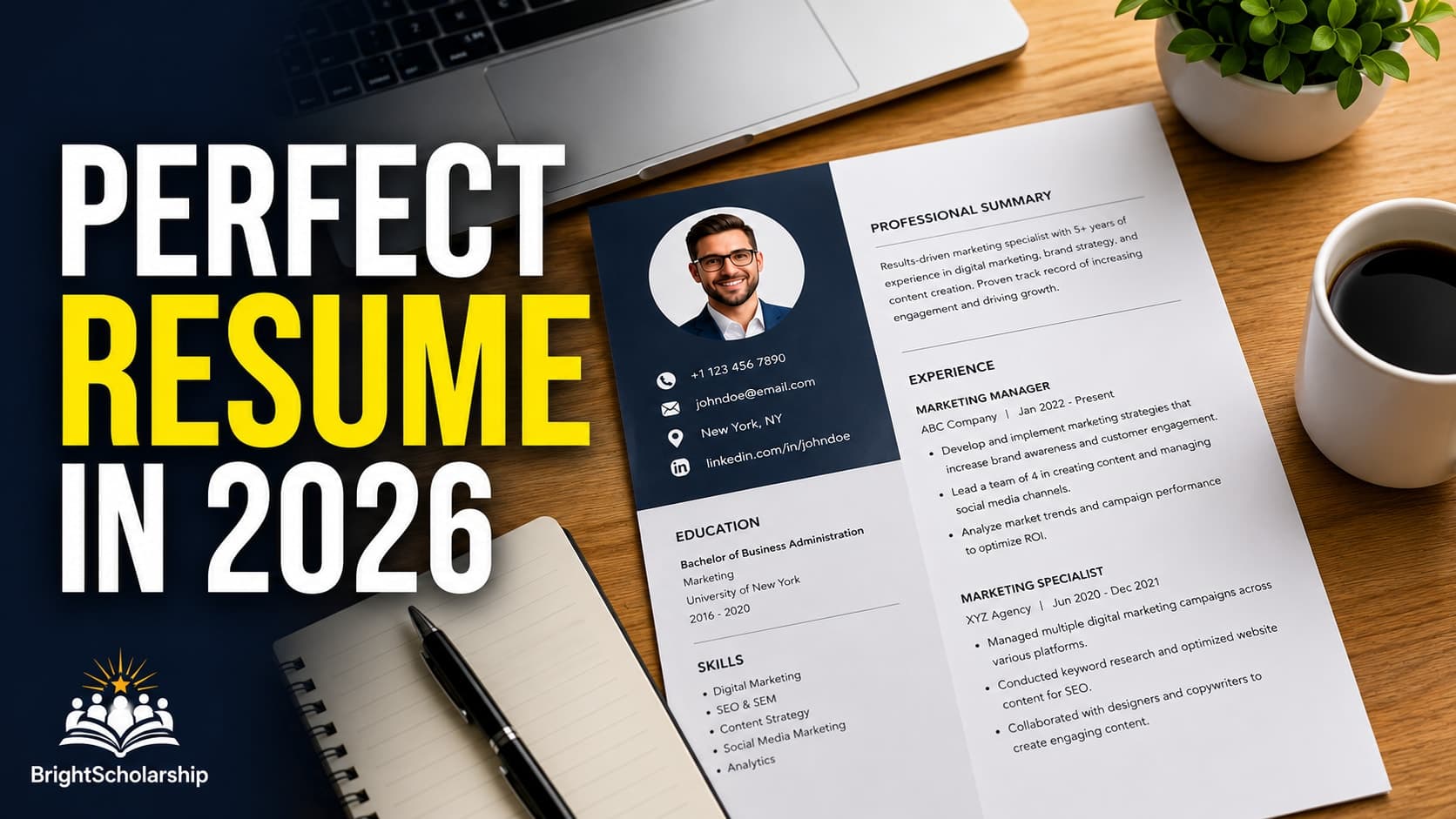
How to Make an Effective Resume/CV in 2026 (Complete Guide)
A 2026 guide to writing a scholarship and job-ready CV that gets noticed, covering structure, formatting, achievements, and common mistakes to avoid.

How to Make an Effective Resume (CV) in 2026
Getting into a strong scholarship program or landing a competitive job almost never happens without a well-built CV. And yet, for a lot of students, writing one feels harder than it should be. Not because they lack achievements, but because they don't know how to present what they've done in a way that actually gets read.
This guide walks through exactly how to build a CV that works for academic applications in 2026, what to include, what to leave out, and how to make sure the person reviewing it actually understands why you're a strong candidate.
You may also want to read our companion guides: How to Write an Effective Motivation Letter in 2026 and A Comprehensive Guide to Writing an Impressive Cover Letter in 2026.
Formats vary slightly from country to country and university to university, but the underlying logic is consistent almost everywhere: clear personal details, a short summary, relevant experience, education, and any additional credentials worth mentioning, all presented cleanly enough that a reviewer can scan it in under a minute.
Start With Clear Personal Details
Open with your name, contact information, nationality, and any other basic identifying details the application asks for. This part doesn't need creativity. It needs to be accurate, easy to find, and easy to read.
Resist the urge to get playful with font sizes here or anywhere else in your CV. A document that mixes font sizes to "highlight" different sections usually ends up looking cluttered rather than organized. Pick one clean, readable font and stay consistent throughout.
Write a Short Summary
A two or three line summary near the top helps orient the reader before they get into the details. This isn't the place for a full narrative. Just a tight snapshot of who you are academically and what you're aiming for.
Include your strongest one or two accomplishments here, along with any core skills genuinely relevant to what you're applying for. If you've worked on a research project connected to the field you now want to study, or won a notable academic award, this is a good place to flag it briefly, since the reader will see it before anything else.
Highlight Relevant Experience
List your experience starting with the most recent, and keep the focus tight: only include what's actually relevant to the program or role you're applying for. This isn't the place for your entire work history if most of it doesn't connect to your goals.
If you don't have formal professional experience yet, internships absolutely count, and are often exactly what reviewers expect to see from students and recent graduates.
For each entry, aim for three or four bullet points that cover your core responsibilities and, more importantly, your actual impact. If you supervised a team, say so, since it signals leadership. If your work changed how something ran, or was recognized in some way, say that too.
Numbers help more than most students realize. Compare "helped with a research project" to "completed a planned five-month research project in two months and was recognized as top intern of the month." The second version gives the reader something concrete to remember you by.
List Your Education Clearly
Start with your most recent degree and work backward. When you include your grades, list the maximum obtainable score alongside your own, since this gives context that a raw number alone doesn't provide.
If your GPA isn't particularly strong, it's fine to leave the number out entirely and instead note something like class ranking, if it works in your favor (for example, being among the top students in your cohort). The goal is to present yourself honestly while still putting your best details forward.
Include any training or coursework in this section that's genuinely relevant to what you're applying for, and skip anything that isn't.
Be Honest, Not Just Impressive
Most CVs don't require formal proof of every claim (education credentials are the main exception), but that doesn't mean you should exaggerate. If your CV claims expertise or achievements in every single area, it starts to read as implausible, and reviewers who evaluate hundreds of applications tend to notice.
The same goes for conferences, internships, or institutions. Only include ones that genuinely exist and that you genuinely took part in. Reviewers occasionally verify details, and an inconsistency here can undo an otherwise strong application.
Add an Additional Information Section
This is where certificates, conference presentations, and other credentials can go, again filtered down to only what's relevant to this specific application. Dumping in every certificate you've ever earned dilutes the ones that actually matter.
If you have IELTS or TOEFL results, this section (or a dedicated one near the bottom) is a good place for them, listing individual band or section scores since some reviewers want to see the breakdown rather than just the overall score. If you don't have test results, either leave this out entirely or, where accepted, include a note about an English proficiency letter confirming your previous education was conducted in English.
Remember: Presentation Comes First
Before a reviewer reads a single line of content, they form an impression from how your CV looks. Clean spacing, consistent formatting, and a logical structure all matter more than people expect. A CV that's visually organized signals that the person behind it is organized too.
What If You Don't Have Much to Show Yet
If you're early in your academic career and feel like you don't have much to put on a CV, the good news is that this is fixable with a few months of deliberate effort. Free or low-cost online certifications, a short internship, or a small research contribution can all give you genuine, honest material to work with. This matters most for students aiming at competitive university admissions or fully funded scholarships, where every section of the CV is expected to carry some weight.
Frequently Asked Questions
How long should a CV be? For most scholarship and academic applications, one to two pages is standard. Keep it tight and relevant rather than padding it to fill space.
Do I need to include a photo on my CV? This depends entirely on the country and institution. Some regions expect a photo, others consider it unnecessary or even discourage it. Check the specific application guidelines before deciding.
Should I list every job or internship I've ever had? No. Only include experience that's genuinely relevant to the program or role you're applying for. Irrelevant entries dilute the stronger, more relevant ones.
What if my GPA is low? You can choose not to display it and instead highlight other strengths, such as class ranking, research output, or extracurricular leadership, provided those are genuinely accurate.
Is it okay to use a CV template? Yes, templates are a fine starting point, but make sure the final version is clearly filled out with your own accurate information and reads naturally, not like a copy-pasted shell.
Final Thoughts
A strong CV isn't about listing everything you've ever done. It's about presenting the most relevant parts of your background clearly, honestly, and in a format that respects the reader's time. Keep it clean, keep it accurate, and make sure every section earns its place by connecting directly to what you're applying for.
About the Author

Nadia Bridman writes about scholarships, financial aid, and the application process for students navigating the search for funding. Her pieces focus on practical, step-by-step strategies drawn from real application experiences, aimed at helping students turn a stack of 'no's' into a 'yes.' If you want, I can write a couple variations — one more formal/credential-driven for a bio page, one shorter for byline snippets under each post title. Just let me know the tone you're going for.